
Keep the pieces if a key has snapped. If the whole key remains in the door, describe that instead. Those two requests can look similar in a quick message, but they are not the same account of what happened.
Lock repair in San Fernando starts with the ordinary action that changed. The key, cylinder, handle and door fit can all be part of that account. You do not need to choose replacement hardware before the fault has been assessed.
An intact key and a broken fragment
Say whether the key entered fully, turned, and remained after opening or locking. Mention whether this is the first time or a familiar behavior. Do not force the key to repeat the fault or put glue, improvised extractors or another object into the keyway.
Some models intentionally retain a key in particular positions. Kwikset's SmartCode 955 is one documented example, not a diagnosis of every lock. The guide to a retained key explains why the normal function and any recent change belong in the same conversation.
Keep the rest of the entrance in view
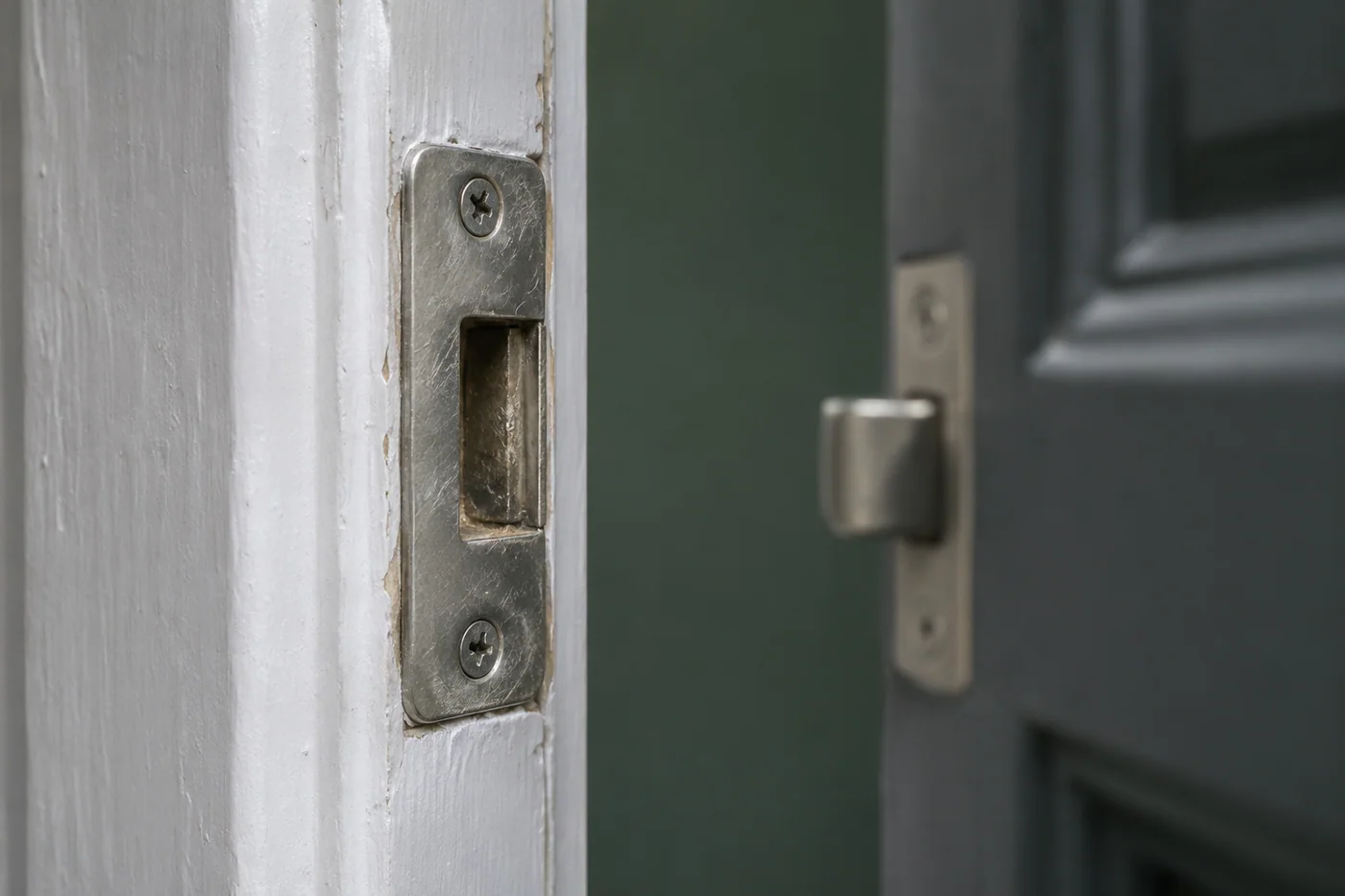
A cylinder that turns does not establish that the handle, latch and door fit are all working. Describe a loose fitting, an entrance that catches the frame or a bolt that has become awkward when the door closes. Include what still works without trying to dismantle anything.
A repair proposal should explain which part needs attention and why. If a replacement is suggested, ask what it changes and what stays. A new cylinder, key extraction and work elsewhere on the entrance are different scopes, even when they are discussed during one visit.
Earlier work is useful history
Mention a recent key copy, rekey, handle change or door work if you know about it. That sequence can be more useful than an assumed component name. Keep any model details or work record you already have; there is no need to climb or remove parts to find a label.
If the issue followed a change of keys, the rekeying page helps keep the intended access arrangement separate from the physical fault. For a common or business entrance, involve the person responsible before changing its function.
Settle what a complete repair means here
Before agreeing, ask LockReach about the visit charge, labor, parts and the result the work is intended to achieve. If inspection finds another issue, understand the revised scope and charges before that extra work proceeds.
Afterward, ask for the relevant normal opening, closing and key operation to be explained and demonstrated. Keep a note of any remaining concern. Discuss the entrance and current availability at 747-202-1211; for a household request, home lock information may also help.
A FEW DIRECT ANSWERS
Questions about
this request.
Does a trapped key mean I need a new lock?
Not automatically. The condition, intended function and actual fault need assessment before the work is chosen.
Should I use glue to pull out a broken piece?
Avoid adding glue or improvised objects to the keyway. Describe the fragment and arrange suitable help.
What if the key turns but the handle still will not release?
Include both observations. A key-cylinder repair does not automatically repair a separate handle or latch fault.
References: Kwikset cylinder/latch support / Kwikset SmartKey rekey instructions. Reviewed November 10, 2026. Product examples are model-specific; local references do not imply affiliation.