
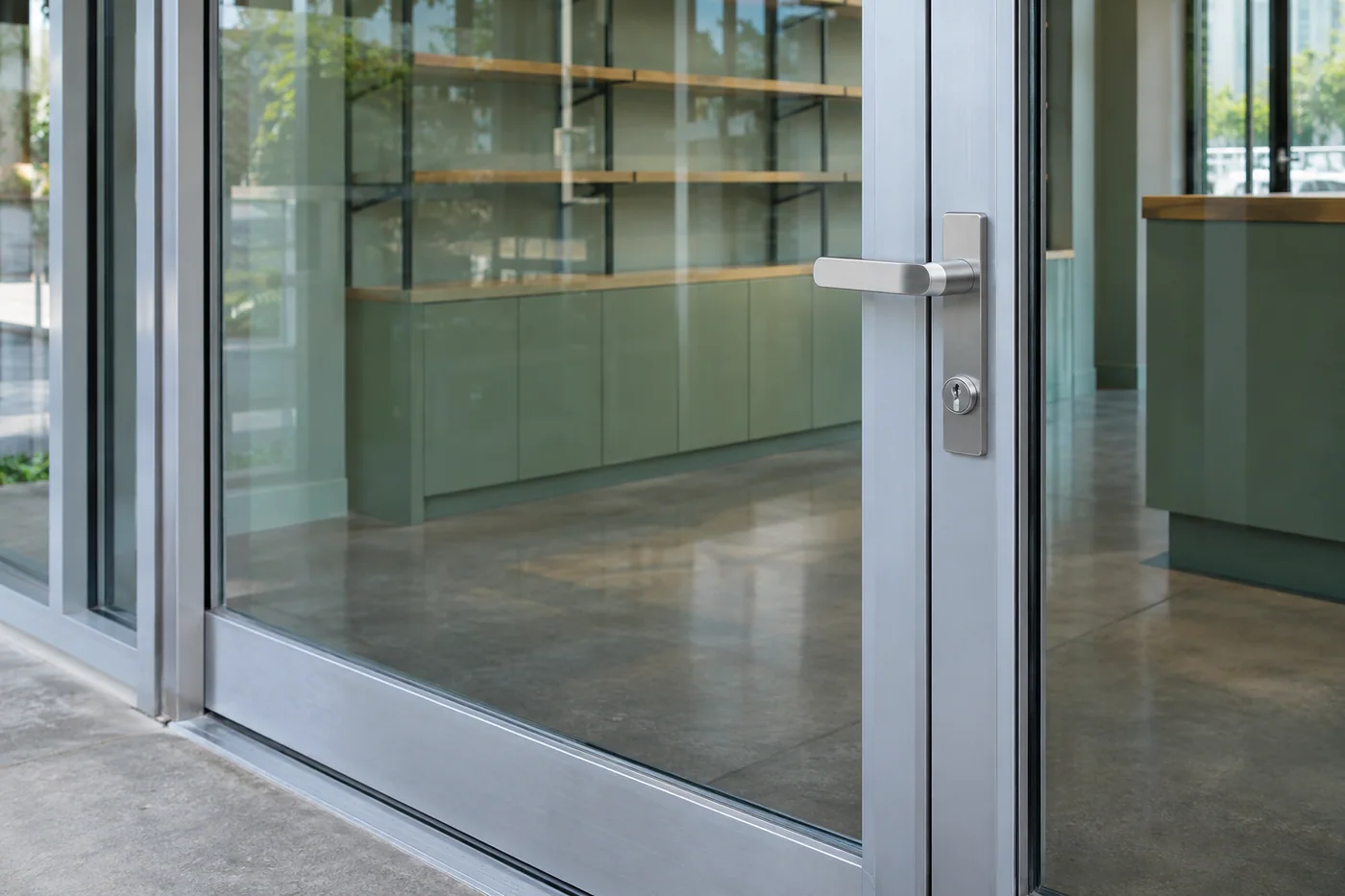
A troublesome door can get lost in the working day. Staff find a way around it, someone leaves a note, and the next person assumes that is how the entrance is meant to behave. When arranging a commercial locksmith in San Fernando, describe that routine.
The request may involve access for a new person, a key that remains in the lock, a handle problem or an entrance that no longer secures as expected. Identify which door is involved and who can approve changes.
A key remaining in place needs context
An intact key that stays in after unlocking is a different account from a broken blade. It can also be different from the expected key-retaining function of particular hardware. Say whether the behavior changed and include the model if it is already known.
Kwikset documents key retention for its SmartCode 955 while unlocked. That example shows why the model matters; it does not identify the cause at your door or establish support for that equipment. The retained-key guide keeps the observation separate from a diagnosis.
A shopfront can have another working entrance
San Fernando Road and Celis Street form part of the downtown street context. A street-facing address may involve a customer door, a separate work entrance or common access managed with other occupants. Use the actual entrance when explaining the job.
A private room, suite and main building door may have different responsible people. Include that boundary before arranging a change of key access. More copies do not remove access held by someone with an existing key.
Keep the intended function in the proposal
Ask what the entrance should do when the work is finished. If a normal feature is being changed, understand why and who has approved it. A repair should not quietly become a different access arrangement.
Mention closing, latching and exit concerns separately from the key cylinder. Exit hardware must preserve its intended function. Do not compensate for a fault by adding a barrier or an improvised restraint. Identify a powered gate, shutter or electronic access system separately so its support can be checked.
Leave a useful record for the next shift
Keep the doors included, work completed, parts changed and keys supplied with the business records. Ask which normal functions were checked and whether a concern remains. A colleague who was not present should be able to understand what changed.
Call us at 747-202-1211 about the business entrance, the problem and who can approve the work. At LockReach, we can discuss rekeying, repair or suitable replacement hardware. For a physical fault, the lock repair page explains the parts involved.
A FEW DIRECT ANSWERS
Questions about
this request.
Does a key staying in the lock always mean it is faulty?
Some hardware intentionally retains a key in certain positions. A new problem needs its own assessment against the actual model and normal function.
Can a suite tenant approve changes to the building door?
Authority over a private suite may not include shared building hardware. Involve the responsible owner or manager.
Will more staff key copies disable old keys?
No. Explain whether you are issuing access, removing access or repairing the door; those are different outcomes.
References: Downtown San Fernando planning context / Kwikset cylinder/latch support. Reviewed November 10, 2026. Product examples are model-specific; local references do not imply affiliation.